
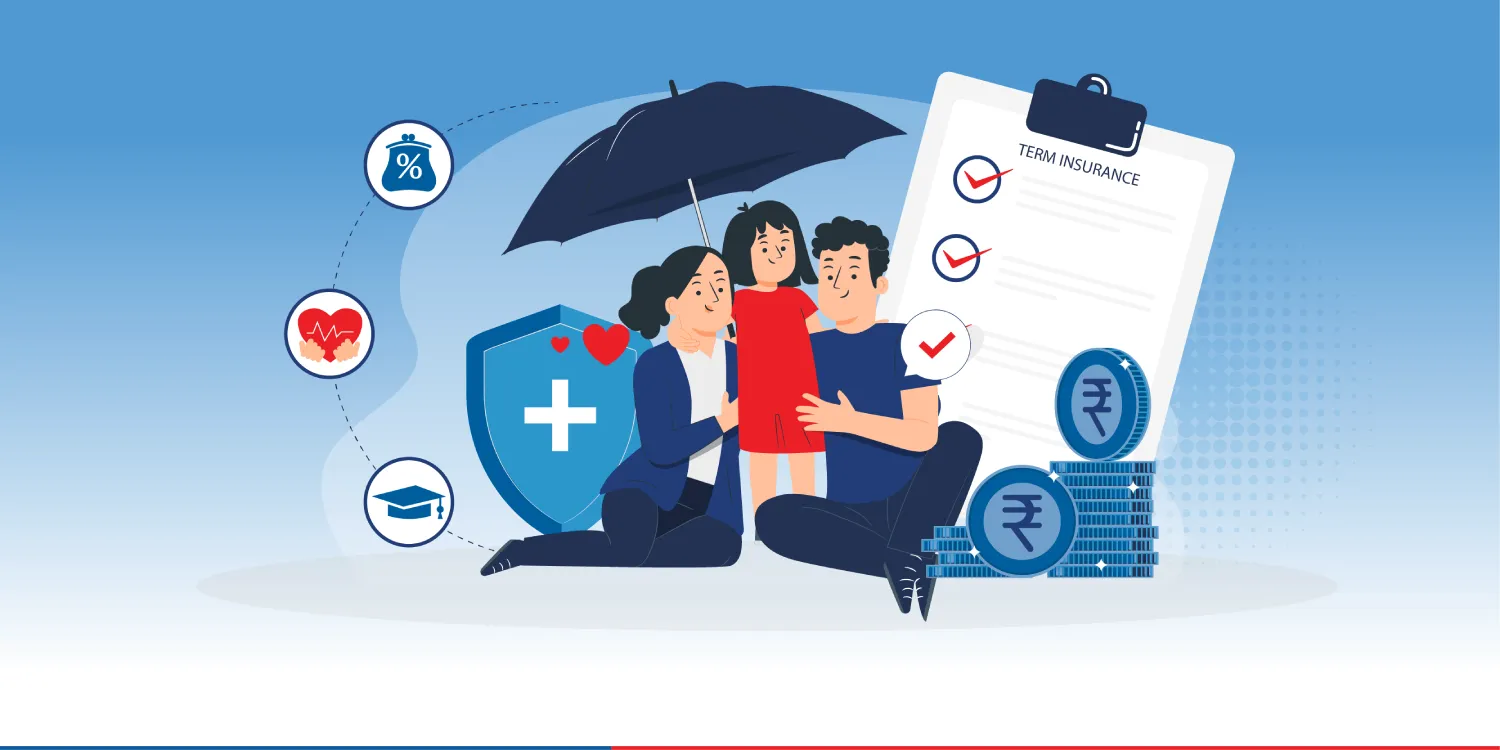
Why Choosing the Right Term Plan Could Secure Your Family’s Future
Read Time:6 Minute, 0 Second
In an era of rapid economic uncertainty, changing family dynamics, and unexpected life events, financial readiness is no longer prudent; it is necessary. One of the many financial instruments that are now available to Indian families, a term plan is among the easiest and most affordable means of securing the long term. But all term plans are not created equal, and the appropriate choice can be the difference between securing your family’s future and jeopardising it.
The Indian Context: Why Term Insurance Is More Relevant Than Ever
India is a developing country. Even as urbanisation, growing incomes, and technology-driven changes have empowered the middle class, they have also induced new stresses, growing education fees, medical bills, and lifestyle inflation. In spite of all this, India’s insurance penetration is appallingly low. As per IRDAI data, a large percentage of the population is uninsured or underinsured.
This coverage gap is not due to ignorance. The issue, in most cases, is an underlying lack of understanding of the definition of term insurance and its place in complete financial planning. Most Indians still view insurance as an investment product and not as a protection product. This approach must change.
Learning Term Insurance Definition and Its Special Significance
Essentially, term insurance is a pure protection life product. It will give your beneficiaries a sum of money if you pass away suddenly towards the end of the policy term. Nevertheless, unlike traditional life insurance policies that come with savings or investment elements, a term plan does not have a maturity benefit, thus being very affordable to purchase and yet with high cover.
In summary, you pay a minimal premium to take care of your loved ones with a large amount of money in the event that you pass away prematurely. Your loved ones are then able to maintain their lifestyle, settle debts, finance your children’s education and fulfil long-term goals, even in your absence.
This protection-oriented focus on investment makes term insurance an integral part of a solid financial plan.
Key Reasons Why It Is Significant to Select the Right Term Plan
1. Adequate Coverage Tailored to Your Life Stage
The key feature of a term plan is the sum assured, the amount of money your family receives if you pass away during the policy term. You must ensure you choose an amount that is suitable for your family’s financial needs, debts, and future aspirations. A blanket plan simply will not suffice.
For instance, a 30-year-old employed person with older parents and two newborn children may need more cover than a single person with no dependents. The right term plan will take into account current income, loans, spending on lifestyle, and inflation-adjusted expenditure in the future.
2. Flexible Riders for More Protection
Modern term insurance policies come with riders such as critical illness cover, accidental death benefit, waiver of premium on disability, and income replacement. These riders, when selected wisely, give you layers of protection to your basic cover without making the premium prohibitively expensive.
For instance, a critical illness rider will provide you with a lump sum when you have a life-threatening illness. It will provide treatment without disturbing the financial security of your family members. The judicious mix of riders turns a simple term policy into a full-fledged coverage shield.
3. Policy Term Suited to Your Financial Needs
Choosing the optimal policy term is another often overlooked factor. A longer policy that extends to your retirement years ensures your dependents will be covered in your earning years when your income is most valuable to the family.
To the contrary, if you wish to be wealthy in a shorter span of time, a shorter term will work. The ideal term should be aligned with your life goals such as retiring your housing loan, bringing up your kids, or building a retirement corpus.
4. Insurer Reputation and Claim Settlement Ratio
When you buy a term plan, you are essentially relying on the insurer’s word. It is thus essential to look at the insurer’s claim settlement ratio, solvency margin, and customer service history.
In India, IRDAI publishes the claim settlement ratio annually and represents the proportion of the claims settled by an insurer to the claims incurred. The greater the ratio, the healthier the insurer. And digital-first insurers with paper-less onboarding, proactive service, and transparency are likely to deliver a better customer experience.
5. Long-Term Viability with Affordability
Even though one may have the tendency to choose the lowest premium term plan simply based on cost, it may not be wise. Affordability has to be balanced with sustainability. Paying premiums for a renewable plan with increasing premiums or an insurer with additional charges can cost a lot in the future.
Instead, go in for level-premium term plans in which your premium remains constant throughout the term. This enables planning and keeps you covered without unexpected increases in rates later on in life.
Trending Now: Breakthrough Term Plans for the Indian Millennial
The technologically advanced millennials that form the new consumer generation are not only asking for protection but also customisation, ease, and convenience. Insurers are introducing new term products that are sensitive to evolving tastes in response.
- Return of Premium (ROP) Plans: They refund all the premiums you have paid when you survive the policy duration. Even costlier, they are favored by individuals who desire a no-loss plan.
- Income Replacement Term Plans: Instead of a lump sum payout, your family receives a monthly income stream equal to your salary and helping with day-to-day budgeting.
- Increasing Cover Amounts: Some policies allow you to raise the amount assured as you grow older and your income and liabilities rise.
These developments form part of a broader shift in the way Indian consumers are perceiving life insurance not as a ritual obligation, but as an enabling way of participating.
The Behavioral Shift: Term Insurance as a Moral Responsibility
Most, perhaps, is the change in attitude. Purchasing a term plan must never be a negative, fear-based choice. Instead, it must be an act of love, of responsibility, of prudence. It’s a silent vow to your loved ones that they will be provided for, no matter what.
In Indian culture, where family comes first and emotions run deep, safeguarding the future of the people you love is not just sensible, it’s honourable.
Conclusion: Secure Today to Empower Tomorrow
Briefly speaking, a term plan is not just a policy; it’s a pillar of financial security. But to avail its true benefits, you must choose the right plan, right for your life goals, liabilities, and ambitions. Whether you are starting your career, planning your family, or nearing retirement, including a well-thought-out term insurance plan is one of the most important decisions that you can make.
The process starts with understanding the term insurance meaning, finding the optimum plan design, and keeping oneself updated with the latest trends in the Indian insurance industry.
In an era of certainties when only certainties are certain, the correct term plan is your family’s ultimate financial safeguard. It is your voice, your support, and your legacy that echo long after you are gone.

Happy
0 %

Sad
0 %

Excited
0 %

Sleepy
0 %

Angry
0 %

Surprise
0 %
 0
0
 0
0
More Stories

How to Style Silver Jhumkas with Stones for Sarees, Kurtas and Festive Looks
Jhumkas have never really gone out of fashion, but the way people wear them has shifted. Heavy, statement-size pairs still...

Best Sunscreen in India: Top Dermatologist-Recommended Picks
Even with a lot of options for sunscreen sitting on the shelf, you may still wonder why your skin keeps...

Why Moissanite Is Becoming a Serious Choice for Modern Engagement Rings
Engagement ring buyers today have more options than ever before. Natural diamonds remain important to many couples, while lab-grown diamonds...

Can You Build Muscle Without Lifting Heavy?
To build muscles, you don’t always need heavy weights. Maybe you are new to strength training, working out at home,...

Latest Sharara Suits Online That Are Perfect for Weddings & Festivities
Some outfits have that touch of magic to make all celebrations more memorable. The latest Sharara suits available online combine...

5 Everyday Mistakes That Steal Your Skin Glow
Has your skin lost its natural glow despite following a skincare routine? Is it about expensive products? It’s clear answer...