
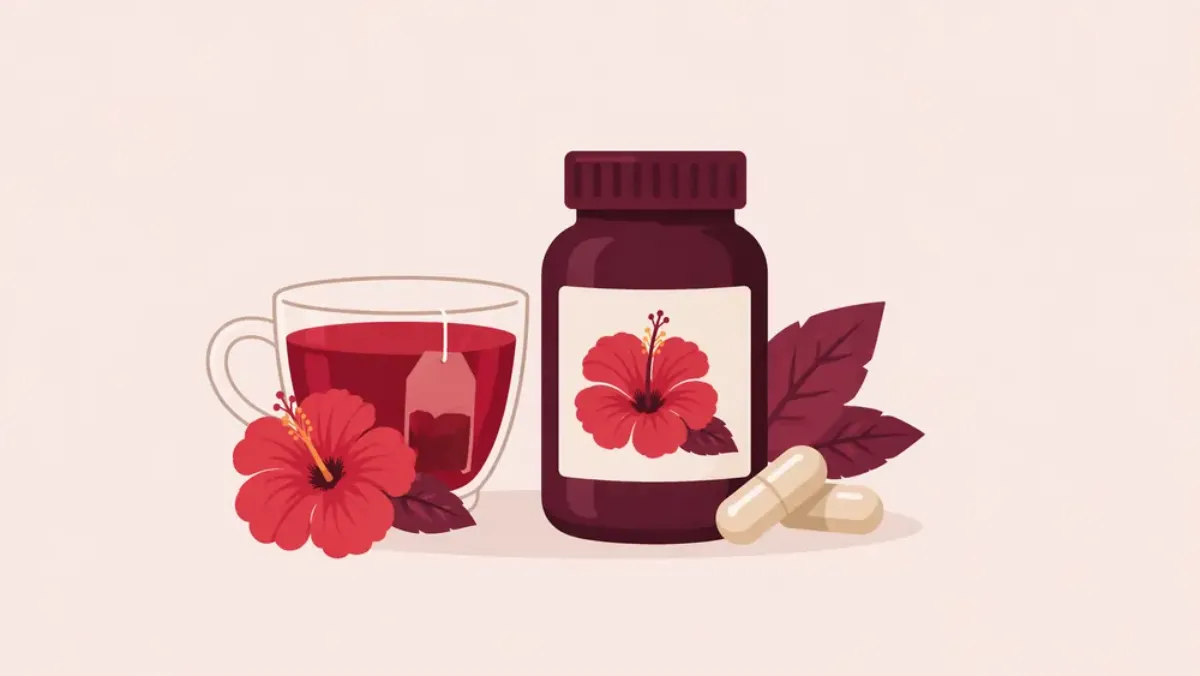
Hibiscus Tea Bags vs Hibiscus Capsules for Consistent Daily Use
Read Time:10 Minute, 6 Second
Hibiscus Tea Bags vs Hibiscus Capsules is a useful comparison because the real question is not only flavor. It is consistency. One format is built around brewing, taste, and tea ritual. The other is built around routine, speed, and lower effort. If you want hibiscus to become part of daily life, that difference matters more than most people expect.
Many people start with hibiscus tea because it is familiar. Tea bags are easy to find and simple to brew. But daily use depends on more than availability. It depends on whether you want tart flavor every day, whether you want to boil water every day, and whether you want the habit to live in the kitchen or move with your schedule. This article breaks that down clearly.
What Is the Main Difference Between Hibiscus Tea Bags and Hibiscus Capsules?
The main difference is routine style. Hibiscus tea bags create a brewed, flavor-led experience. Hibiscus capsules create a more predictable supplement habit with fewer steps.
Tea bags still ask for water, a cup, steeping time, and a willingness to drink hibiscus as a beverage. Capsules skip those steps. They remove the tart drink, the temperature choice, and the brewing variability that comes with tea.
This does not mean one format is universally better. It means they solve different problems. Tea bags fit people who enjoy herbal tea as a ritual. Capsules fit people who want a simpler routine.
Why Do Tea Bags Feel Different From Capsules in Daily Use?
Tea bags feel more like an experience. You choose the mug, the water temperature, the steeping time, and sometimes how strong you want the drink. That can be enjoyable. It can also create inconsistency.
Capsules feel more like a repeatable step. You follow the label, take the capsules with food if directed, and continue your day. The taste and brewing variables disappear. For busy people, that simplicity is often the biggest advantage.
The more a habit depends on mood, the easier it is to skip. Tea often depends on mood. Capsules usually depend on routine.
What Makes Tea Bags a Flavor-Led Routine?
Tea bags keep flavor at the center of the habit. Hibiscus tea is widely known for its tart, bright, cranberry-like profile. Some people love that. Others like it occasionally but not every day.
Tea bags also make preparation part of the experience. Even though they are easier than loose flowers, they still involve brewing. The flavor can vary depending on steeping time, water amount, and whether the person likes the tea hot, iced, diluted, or sweetened.
That makes tea bags appealing for people who enjoy ritual and taste. It makes them less ideal for people who want a habit that feels the same every day.
What Makes Capsules a More Predictable Daily Habit?
Capsules remove most of the daily variation. You do not need to decide how strong the hibiscus should taste, whether to add sweetener, or whether you are in the mood for a tart drink. You just follow the suggested use.
This matters because predictability is one of the strongest advantages in a supplement routine. If the goal is regular use, a low-effort format usually works better than a flavor-based format.
Hibiscus capsules are especially useful for people who want daily consistency without turning hibiscus into a drink decision every time.
Quick Comparison: Tea Bags vs Capsules
If you want ritual and taste, tea bags usually win. If you want lower friction and routine consistency, capsules usually win.
| Feature | Hibiscus Tea Bags | Hibiscus Capsules |
|---|---|---|
| Routine style | Brewed tea ritual | Simple supplement habit |
| Prep time | Requires brewing | Very low |
| Taste factor | Tart and noticeable | Minimal direct taste |
| Variability | Higher | Lower |
| Portability | Moderate | High |
| Best for | People who enjoy tea | People who want predictable daily use |
Who Should Choose Hibiscus Tea Bags?
Choose hibiscus tea bags if the tea ritual is part of what you enjoy. Tea bags are a better fit for people who like warm or iced herbal drinks, do not mind brewing, and enjoy flavor as part of the routine.
Tea Bags Fit Ritual-First Users
If you already drink tea every day, adding hibiscus tea bags may feel natural. The habit does not need much extra explanation because it fits a pattern you already have.
Tea Bags Fit People Who Like Flavor
Some people want hibiscus as a drink, not as a neutral step. If the tart, fruity profile is part of the appeal, tea bags make more sense than capsules.
Tea Bags Fit Home-Based Routines
Tea bags work best when you have access to hot water, cups, and a little time. They are easier in kitchens than in fast-moving work or travel schedules.
Who Should Choose Hibiscus Capsules?
Choose hibiscus capsules if you want the lowest-friction path to a steady habit. Capsules are usually the better fit when taste is not the goal and convenience is.
Capsules Fit People Who Want Less Effort
If brewing feels like too much on busy days, capsules are easier. They turn hibiscus into a quick step instead of a small tea project.
Capsules Fit People Who Do Not Want Tart Flavor Daily
Many people like the idea of hibiscus more than the actual drink. Capsules remove that conflict by avoiding the brewed flavor experience.
Capsules Fit Workdays and Travel Better
A capsule bottle is easier to keep in a bag, drawer, or daily routine than tea bags plus mugs, hot water, and timing.
Capsules Fit Label-Based Consistency
If you want a routine that is easier to repeat the same way each day, capsules usually fit better than tea.
When Are Capsules the Lower-Friction Option?
Capsules are the lower-friction option any time the tea itself becomes the barrier. That includes mornings when you are rushing, workdays when you do not want another drink ritual, travel days, and evenings when you are too tired to brew anything.
They are also the better option when the tartness of hibiscus tea makes daily use less appealing. A capsule does not ask you to like the taste. It only asks you to keep the routine simple.
This is why capsules often work better for consistency even when tea bags seem easier than loose flowers.
Why Do Tea Bags Still Create Brewing Variability?
Tea bags reduce some complexity, but they do not remove all of it. The taste can still change depending on steep time, water temperature, cup size, and whether the tea is served hot or cold.
That variability is not bad. It is part of what makes tea interesting. But it can work against consistency when the goal is a stable routine rather than a beverage experience.
Capsules remove most of that variation. That is one reason they feel more predictable for daily use.
What Kind of Buyer Usually Prefers Tea Bags Over Capsules?
The buyer who prefers tea bags usually wants a drink, not just hibiscus itself. They enjoy the process, the aroma, and the act of sipping something warm or cold.
They are also more likely to enjoy tart flavors or at least not mind them. For this person, the small amount of brewing effort feels worth it because the ritual is part of the value.
If that sounds like you, tea bags may still be the better fit.
What Kind of Buyer Usually Prefers Capsules Over Tea Bags?
The buyer who prefers capsules usually wants fewer decisions. They do not want hibiscus to depend on a kettle, a mug, or a taste preference that changes from day to day.
They may also be the kind of person who has already tried hibiscus tea and realized that the drink is not practical for regular use. Capsules solve that exact problem.
This buyer is usually focused on routine reliability more than sensory enjoyment.
How Do You Decide Which Format Fits Your Routine?
The easiest way to decide is to ask what matters more: ritual or repeatability.
Choose Tea Bags If You Like the Tea Experience
Go with tea bags if you enjoy brewed herbal drinks and do not mind a little daily prep.
Choose Capsules If You Want Lower Effort
Go with capsules if the brewing step, tart flavor, or variability of tea makes daily use less realistic.
Choose Based on Weekday Reality
Your real schedule matters more than your ideal schedule. If the habit has to survive busy weekdays, capsules often have the advantage.
Checklist: Which Format Fits You Better?
Use this checklist before choosing hibiscus tea bags or hibiscus capsules.
- Choose tea bags if you enjoy herbal tea as a ritual.
- Choose tea bags if tart flavor is part of the appeal.
- Choose tea bags if you do not mind daily brewing.
- Choose capsules if you want a lower-friction daily format.
- Choose capsules if you do not want tart tea every day.
- Choose capsules if weekday convenience matters more than ritual.
- Choose capsules if you want a more portable routine.
- Read the capsule label carefully before use.
- Follow the suggested use and caution section.
- Ask a qualified professional before use if you are pregnant, nursing, or taking medication.
Safety and Label Notes
Hibiscus capsules are a dietary supplement, so the label matters. Read the suggested use, storage directions, and caution section before building them into a routine. The product page for hibiscus capsules also includes dietary preference details and standard supplement transparency language such as third-party testing, GMP, and facility information.
People who are pregnant, nursing, taking medications, or sensitive to herbal supplements should speak with a qualified professional before regular use. This article focuses on routine choice, not medical advice.
It also does not make claims about diagnosing, treating, curing, or preventing any condition.
FAQ about Hibiscus Tea Bags vs Hibiscus Capsules
What is the main difference between hibiscus tea bags and hibiscus capsules?
Tea bags create a brewed, flavor-led routine. Capsules create a lower-effort, more predictable habit.
Which format is better for daily consistency?
Capsules are usually better for daily consistency because they ask for fewer steps and less decision-making.
Who should choose hibiscus tea bags?
People who enjoy herbal tea ritual and tart flavor usually fit tea bags better.
Who should choose hibiscus capsules?
People who want a simple, portable, low-effort daily format usually fit capsules better.
Why do capsules feel more predictable than tea bags?
Because capsules remove brewing variables like steep time, water amount, and flavor intensity.
Are tea bags still easier than loose hibiscus flowers?
Yes, but they still require brewing and flavor decisions that capsules do not.
Can I use tea bags sometimes and capsules on other days?
Yes. Some people use tea when they want ritual and capsules when they want consistency.
Who should be careful before using hibiscus capsules regularly?
People who are pregnant, nursing, or taking medications should ask a qualified professional first.
Glossary
Hibiscus tea bags: Pre-portioned tea sachets used to brew hibiscus tea in hot or cold water.
Hibiscus capsules: A dietary supplement format that provides hibiscus in capsule form according to label directions.
Brewed routine: A habit built around making and drinking tea rather than taking a capsule.
Tart flavor: A bright, sour, cranberry-like taste profile.
Routine consistency: The ability to repeat the same habit regularly with low friction.
Brewing variability: Differences in taste or strength caused by water, steeping time, and preparation style.
Suggested use: The directions on the label explaining how to take a supplement.
Dietary supplement: A product intended to supplement the diet, often with herbs, vitamins, minerals, or other ingredients.
Conclusion
Hibiscus tea bags are a better fit for people who enjoy the brewed ritual and tart flavor. Hibiscus capsules are a better fit for people who want a lower-effort, more predictable daily habit.
Sources
Product format, suggested use, and label context, Secrets Of The Tribe Hibiscus Capsules product page — secrets.shop/products/hibiscus-capsules
Dietary Supplement Labeling Guide, U.S. Food and Drug Administration — fda.gov/food/dietary-supplements-guidance-documents-regulatory-information/dietary-supplement-labeling-guide
Dietary supplements overview and labeling context, U.S. Food and Drug Administration — fda.gov/food/dietary-supplements
General herbal supplement safety guidance, National Center for Complementary and Integrative Health — nccih.nih.gov/health/herbsataglance

Happy
0 %

Sad
0 %

Excited
0 %

Sleepy
0 %

Angry
0 %

Surprise
0 %
 0
0
 0
0
More Stories

BestLinks AI Vs A Paid Invoice For Listings
Directory owners in India often treat a vendor email as a price check. The mailbox looks harmless because no rupee...

CFA Coaching in Indore: Why Krypton Education Is a Smart Choice for CFA Aspirants
The CFA (Chartered Financial Analyst) program is one of the most recognized qualifications for students and professionals building a career...

How Apna Advantage Makes Online Education Affordable in India
The advent of online education has brought a new dimension to how students and working professionals choose to undertake their...

Construction Machinery Trends That Are Reshaping Heavy Equipment Operations
The construction industry has always relied on powerful equipment to complete demanding tasks, but the machinery used today is evolving...

Create Better Small-Business Marketing Visuals Without a Full Photo Shoot
A small business can need a surprising number of images in one month: a seasonal post, a directory listing, a...

5 Tips on Creating a Brand That Attracts Early Customers
When you launch a new business or product, your initial challenge involves more than just offering something valuable. You need...