
How to use Cloud Phones for Digital Marketing across multiple markets
Read Time:5 Minute, 19 Second
Managing digital marketing campaigns remotely sounds straightforward enough. Teams split across home offices, freelancers in different time zones, agencies juggling clients in multiple countries: this is just how modern marketing works. But there’s one layer of the operation most professionals don’t think about until something breaks.
Social platforms pay close attention to how and where accounts are accessed. Instagram, TikTok, Facebook, and Reddit all track device signals, location, usage patterns, and login consistency. An account accessed from different machines, varying IPs, and no stable pattern gets flagged as suspicious, regardless of content quality or media spend.
For those doing professional social media management, this stopped being a technical footnote a while ago. It’s now a factor that determines whether the operation scales with stability or piles up blocks, restrictions, and interruptions at critical moments.
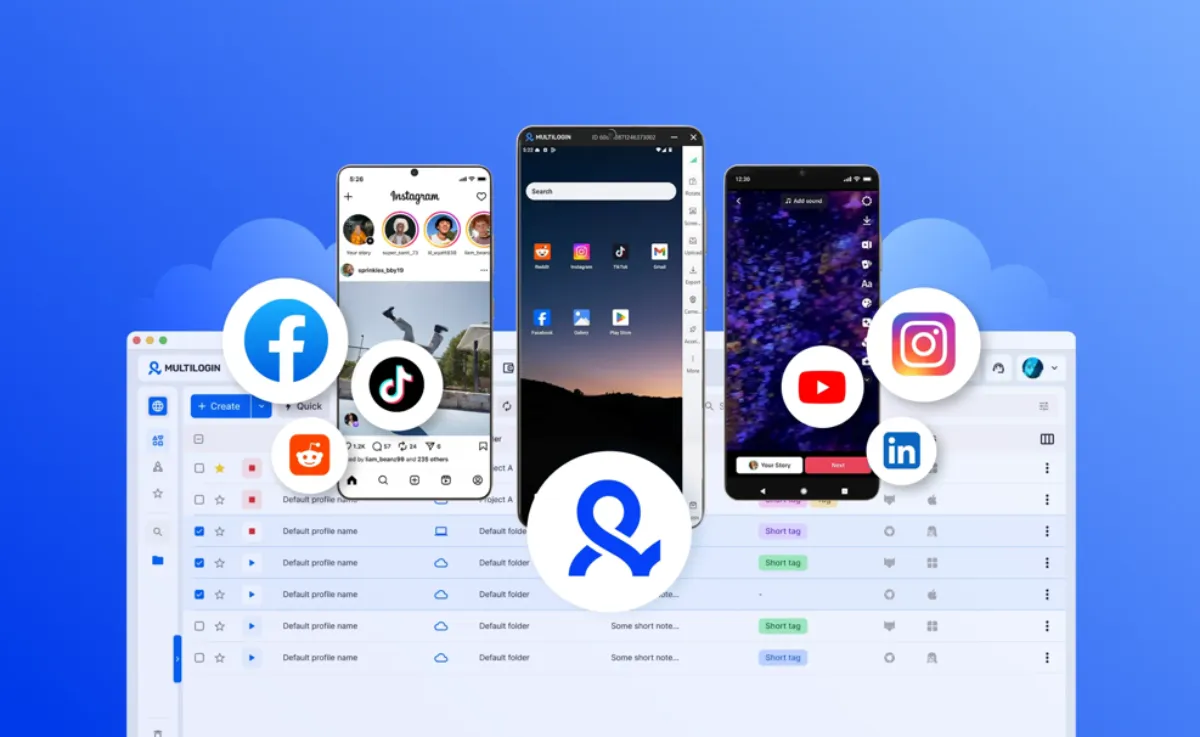
That’s where the cloud phone started gaining ground as infrastructure for professional social media marketing. And Multilogin, combining cloud Android with browser profiles and integrated proxies, has become the go-to reference for teams that need to operate across multiple environments with real control.
The technical side remote work usually ignores
When a team goes remote, the focus tends to be on communication, deliverables, and process alignment. Rarely does anyone stop to consider this: the platforms these teams work on still expect behavior typical of a local user, accessing from a single device, with a stable identity.
A remote team managing ten Instagram accounts from five different countries is, without realizing it, sending inconsistent signals to the platform constantly. The consequences don’t show up immediately, but they do show up:
- Frequent security checks that interrupt active campaigns
- Reach drops with no change in content strategy
- Feature restrictions on ads and DMs
- Account blocks during critical launch periods
- Difficulty testing creatives the way a real local user would
These problems rarely originate in the social media marketing strategy itself. They come from a technical infrastructure that wasn’t built for the volume and distribution that modern digital marketing requires.
What is a cloud phone and how it works
A cloud phone is, in practice, an Android smartphone hosted on cloud infrastructure and accessed remotely from a computer. The difference from emulators and VPNs lies in the authenticity of the environment.
While emulators simulate hardware and leave detectable traces, Multilogin’s cloud phone runs on physical Android devices hosted in the cloud. That means hardware identifiers are read from real components, not artificially generated.
For social platforms, each session looks like a real smartphone being used continuously and naturally. For the digital marketing team, everything is managed from a single dashboard, with no need to switch between physical devices.
Each mobile environment created in Multilogin operates completely independently: it keeps apps installed and logged in between sessions, preserves usage history and behavioral patterns, runs with stable location, time zone, and language settings, and has a unique device identity. Nothing is shared between profiles — no cache, no cookies, no signal that could link one account to another.
Why Multilogin is the choice for social media marketing
Multilogin’s edge isn’t a single feature, it’s the integration of components that, on other platforms, would require separate solutions.
Real Device
Most competitors run on emulators that simulate an Android device. Multilogin cloud phones are real Android devices in the cloud — available in versions 10 through 16. There’s no hardware inconsistency for the platform to detect or flag.
Cloud Phone and Browser Profiles in the Same Ecosystem
Anyone working in social media management knows the operation doesn’t happen only inside apps. Business Manager, scheduling tools, analytics dashboards — all of that runs in a browser. Multilogin integrates cloud phones and browser profiles in the same platform, eliminating the need to mix different tools for mobile and desktop environments.
Residential and Mobile Proxies Included at No Extra Cost
Digital marketing operations across multiple markets need consistent regional IPs. Multilogin provides access to over 30 million IPs across more than 150 locations, with geolocation, language, and time zone automatically aligned to each profile.
Range of Android Models and Versions
Multilogin offers around 30 device models from brands like Samsung, Xiaomi, Motorola, OnePlus, OPPO, and Vivo, running Android 10 through 16. For teams that need to test how content and ads render across different devices, that’s a level of control most platforms don’t come close to offering.]
Multilogin cloud phones work equally well for individuals and small teams getting started. There’s a free plan with no time limit and no credit card required, so teams can test the full cloud phone and browser profile environment before committing. Paid plans start from $7.08/month, with Business plans (300 to 10,000+ profiles) from $57.08/month for agencies operating at scale.
What changes in practice for digital marketing teams
For teams coordinating remote work across clients and markets, the gains go beyond technical stability. The operation gets a structure that actually scales.
- Global access: each client or market runs on its own real Android device in the cloud, accessible from anywhere without physical hardware
- Unified dashboard: manage all mobile environments from one place, regardless of how many accounts or regions are active
- Better reach and engagement: consistent device identity and stable sessions mean the platform sees natural behavior, content performs better as a result
- Automation: native integration with Selenium, Puppeteer, Playwright, and the Multilogin API lets teams automate routines without compromising profile identity
- Real device for each client: every account runs on its own dedicated Android environment, so sessions stay isolated and there’s nothing shared to flag
Conclusion
Running one social media account from a single phone is manageable. Running twenty or thirty, across different clients, markets, and team members in different time zones, is a different challenge entirely.
The issues that surface at that scale are rarely about strategy or content. They come from underneath: inconsistent device signals, shared environments, sessions that drop at the worst moment, and platforms quietly throttling reach before anyone realizes what’s happening.
Multilogin removes that layer of friction. Each account gets its own real Android device: persistent, isolated, accessible from anywhere. Sessions hold. Proxies keep location signals clean. Browser profiles cover the desktop side. Everything runs from one dashboard, no credential sharing, no physical devices changing hands.
For freelancers, agencies, and in-house teams operating at volume, that’s the difference between a setup that holds together and one that creates new problems every time the operation grows.

Happy
0 %

Sad
0 %

Excited
0 %

Sleepy
0 %

Angry
0 %

Surprise
0 %
 0
0
 0
0
More Stories

Why AI Image Generators With Image Upload Support Are Becoming Essential
Text-only AI image generation is impressive, but for businesses it quickly hits a ceiling. A prompt can create a beautiful...

Best Cloud Phones for Managing Multiple Business Accounts
Managing multiple business accounts can become difficult when a company depends entirely on physical smartphones. Social media teams, marketing agencies,...

How Industry-Specific Digital Marketing Drives Growth for Dental, Medical Tourism and Fashion Brands
The key focus of every industry in the present world is to have a distinct digital marketing strategy. Without that,...

BestLinks AI Vs A Paid Invoice For Listings
Directory owners in India often treat a vendor email as a price check. The mailbox looks harmless because no rupee...

The Problem With Software “Best Of” Lists — And What a Recommendation-First Approach Looks Like Instead
Anyone who has tried to pick a SaaS tool recently knows the drill: open a "Top 10" listicle, find ten...

Create Engaging Visual Stories with AI Tools
Visual storytelling is no longer just for professional movie studios or high budget marketing agencies. Anyone with a computer and...