
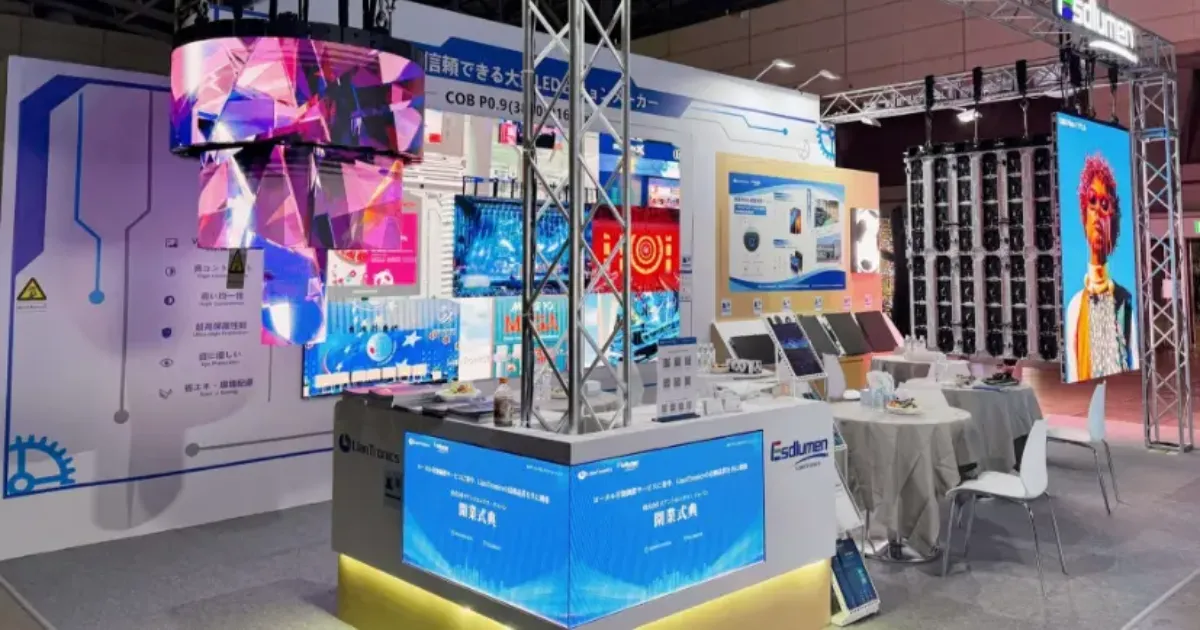
What Size LED Screen Do I Need for a Trade Show Booth?
Read Time:4 Minute, 6 Second
A trade show booth can look roomy on a floor plan and feel crowded the moment crates, counters, staff, lighting, and visitors arrive. Add an LED screen that is too large, and the booth becomes uncomfortable. Go too small, and the content disappears behind the aisle traffic.
The right screen size is less about buying the biggest wall you can fit and more about matching the screen to the job it needs to do.
Start With the Booth’s Viewing Distance
The first question is not “How big can the screen be?” It is “How far away will people stand when they read it?”
For a small inline booth, most visitors may be only a few feet from the display. In that case, a very large screen with oversized text can feel aggressive, while a moderate wall with sharp product visuals may work better. For a larger island booth, people may notice the display from across an aisle, so height and motion become more important.
Pixel pitch matters here. Pixel pitch is the distance between the LED pixels; a smaller pitch usually looks sharper at close range, while a larger pitch can work when viewers stand farther away. For close-up product demos, fine detail matters. For brand motion graphics meant to pull people from the aisle, size and visibility may matter more than microscopic detail.
A practical way to think about it:
| Booth situation | Main viewing distance | Screen role | Size priority |
|---|---|---|---|
| 10×10 inline booth | Close | Product demo or looping brand story | Moderate width, sharp image |
| 10×20 booth | Close to mid-range | Demo plus attraction | Wider back wall or side feature |
| 20×20 island booth | Mid-range | Aisle visibility and meeting zone | Taller, more visible screen |
| Museum-style exhibit | Close and slow viewing | Detail, timelines, interaction | Resolution and placement |
Match the Screen to the Content, Not Just the Wall
A screen that runs a looping brand video does not need the same layout as a screen used for live demos, product comparisons, or interactive touch content.
If the booth team needs to explain a technical product, leave room for readable text, diagrams, and a presenter standing nearby. A wide but low screen can work well behind a counter. If the goal is to stop traffic, vertical height and bright motion often do more than tiny copy. If visitors scan QR codes or compare product specs, keep the screen close enough and clear enough that people do not have to lean in.
Brightness is also part of sizing. Brightness describes how visible the screen remains under surrounding light. Exhibition halls are usually bright, and overhead lighting can flatten weak visuals. Esdlumen’s Exhibition page notes the need for high refresh rates, color consistency, and visuals that remain clear under exhibition hall lighting. Refresh rate is how often the image redraws each second, and it becomes especially important when the booth is filmed or photographed.
Leave Space for People, Rigging, and Fast Setup
A trade show screen is not a flat image pasted onto a booth rendering. It needs power, signal routing, safe mounting, service access, and crew time. The more complex the shape, the more the booth team should plan around installation before committing to a size.
This is where modular LED panels can help. Esdlumen describes exhibition use cases such as trade show booths, museums, art shows, and temporary exhibits, with modular displays that can support wall-mounted, freestanding, interactive, curved, and multi-screen layouts. For teams comparing booth display formats, Esdlumen’s exhibition LED screen solution is a useful reference because it connects screen planning with exhibition content mapping, layout flexibility, and setup support.
That does not mean every booth needs a dramatic curved wall. Sometimes the best choice is a clean rectangular display that installs quickly and keeps the staff focused on conversations. But if the booth design depends on a corner, tower, tunnel, or immersive backdrop, the screen size should be chosen with that shape in mind from the beginning.
Use Size to Support the Visitor Journey
According to AVIXA’s published InfoComm 2025 figures, the show hosted 817 exhibitors, a reminder that trade show attention is earned in a crowded environment. A screen should help visitors understand where to look, what to do next, and why the booth is worth entering.
For many booths, the best size is the one that supports three moments: attracting attention from the aisle, explaining the offer at conversational distance, and giving staff an easy visual tool during the discussion. If a screen fails at one of those jobs, making it larger may not solve the problem.
Before requesting a quote, confirm the booth dimensions, expected viewing distance, content format, rigging limits, install window, and whether the screen needs to be reused at future shows. That short planning step can prevent an expensive display from becoming a cramped, hard-to-service backdrop.
For teams still shaping the booth concept, reviewing an exhibition-focused LED display page can help turn a rough screen size into a more realistic layout plan.

Happy
0 %

Sad
0 %

Excited
0 %

Sleepy
0 %

Angry
0 %

Surprise
0 %
 0
0
 0
0
More Stories

Payment Infrastructure Challenges for Regulated and High-Volume Businesses in India
Indian businesses that process payments at scale run into a problem their accountants rarely warn them about. A company can...
How Industrial Manufacturing Clusters Influence Reactor Selection and Procurement
Chemical and pharmaceutical manufacturers operating within established industrial zones face distinct advantages and constraints when specifying and acquiring process reactors....

How to Manage Flights, Hotels, and Expenses for Corporate Trips
A corporate journey rarely goes wrong because someone forgot to book a flight. More often, trouble begins when small details...

Why AI Image Generators With Image Upload Support Are Becoming Essential
Text-only AI image generation is impressive, but for businesses it quickly hits a ceiling. A prompt can create a beautiful...

Best Cloud Phones for Managing Multiple Business Accounts
Managing multiple business accounts can become difficult when a company depends entirely on physical smartphones. Social media teams, marketing agencies,...

How Industry-Specific Digital Marketing Drives Growth for Dental, Medical Tourism and Fashion Brands
The key focus of every industry in the present world is to have a distinct digital marketing strategy. Without that,...