
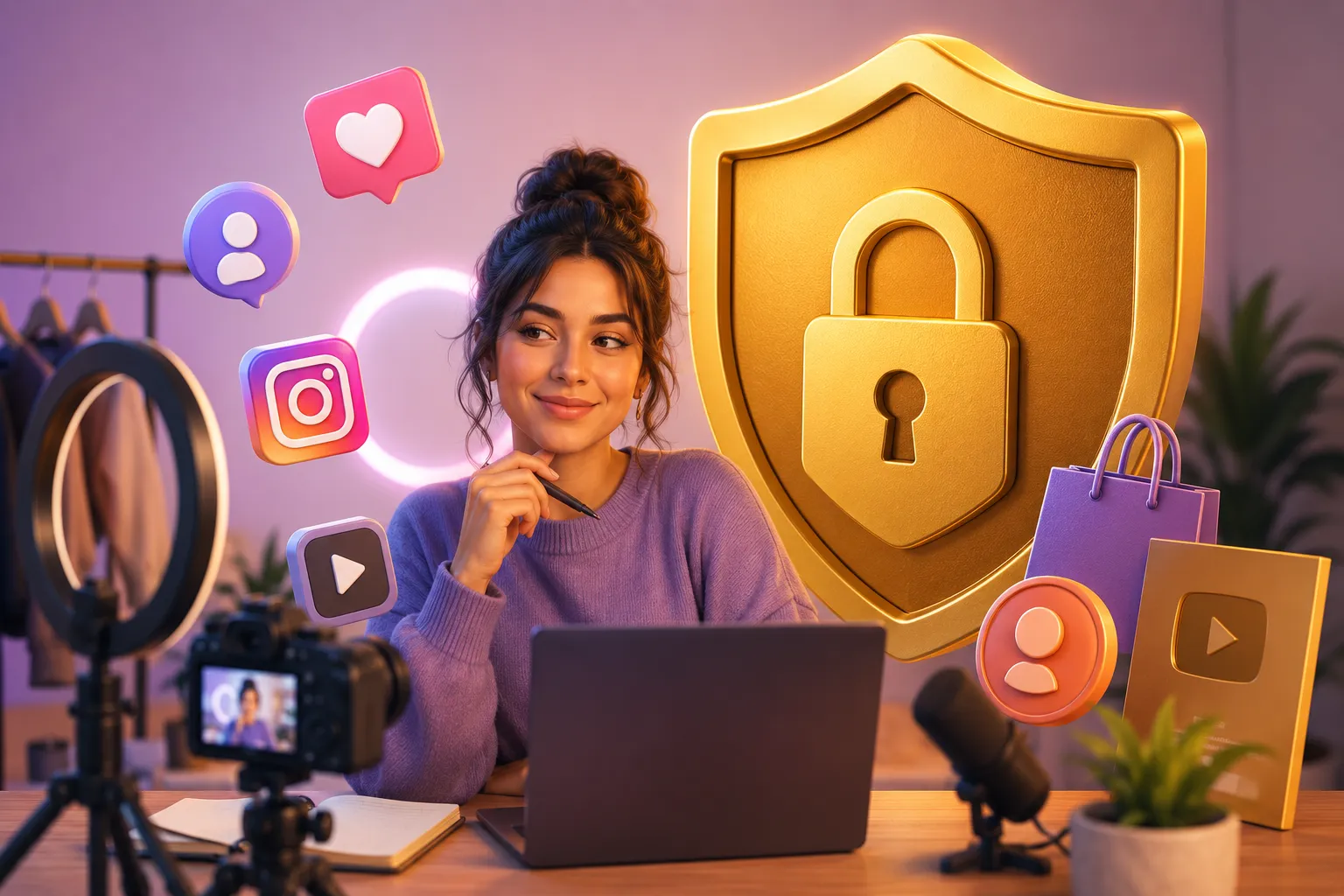
Why Influencers and Content Creators Need Trademark Protection
Read Time:9 Minute, 32 Second
Synopsis: In this blog, we explain why influencers and content creators must consider trademark registration, what they can protect, how a trademark search helps before filing, and what happens when their brand identity is left legally unprotected.
There is a moment every growing content creator reaches — usually somewhere between their first brand deal and their third — when they realise something uncomfortable.
The name they built. The handle everyone knows them by. The logo on their merchandise. The tagline their audience quotes back at them. None of it is legally theirs yet. Anyone can copy, replicate, or register it before they do.
And in India’s creator economy — valued at over Rs. 2800 crore and growing — that is not a hypothetical risk anymore. It is happening. Impersonation accounts using creator names and likenesses. Fake merchandise using channel logos. Other businesses registering names that belong, by reputation if not by law, to someone who spent years building them.
Trademark registration is how creators move from hoping nobody copies them to having the legal right to stop it when they do.
Most creators think of trademark registration as something big companies do. Something for the Nikes and Amazons of the world.
But here is the reality. The moment a creator’s name, channel, or tagline becomes something audiences recognise and associate with a specific kind of content, it is functioning exactly like a brand. It is identifying a source. It is carrying a reputation. It is generating commercial value through sponsorships, merchandise, and collaborations.
Under the Trade Marks Act, 1999, a trademark is defined as any mark capable of being represented graphically and capable of distinguishing the goods or services of one person from those of others. That definition is deliberately broad. It covers names. Usernames. Logos. Taglines. Even distinctive catchphrases have come to identify a specific creator in the minds of their audience.
What Exactly Can an Influencer or Creator Trademark?
This is the question most creators ask first — and the answer is broader than most of them expect:
- Channel Name and Username
The name you go by across YouTube, Instagram, and other platforms is your primary brand identifier. If it is distinctive — not a generic word that describes your content category, but a unique identifier that your audience associates specifically with you — it can be registered as a trademark.
The key condition is commercial use. The name must be used in connection with goods or services — content creation, entertainment, merchandise, branded collaborations — for trademark registration to be applicable.
- Logo and Visual Identity
If your channel has a recognisable logo, intro animation, or signature visual style, that device mark can be registered. This protects against people copying your visual identity for fake accounts, counterfeit merchandise, or competing channels designed to confuse your audience.
- Taglines and Catchphrases
If you have a signature sign-off, a recurring phrase, or a tagline that your audience strongly associates with your content — that too can potentially be trademarked under the right circumstances. The bar here is distinctiveness — it must be something your audience recognises as yours specifically, not a common phrase anyone in the category uses.
- Merchandise Brand Names
If you have or are planning a merchandise line — clothing, accessories, lifestyle products — the brand name under which those products are sold needs its own trademark registration in the relevant goods class. The trademark that covers your content does not automatically protect the product brand.
The Risks of Not Having Trademark Protection
Impersonation and Fake Accounts
This is the most immediate and visible risk. Without a registered trademark, a creator has limited legal tools to compel platforms to act against accounts that use their name, logo, or similar branding to mislead followers. A registered trademark gives the complaint a specific legal basis, which platforms respond to far more reliably than general reports of impersonation.
Someone Else Registers Your Name First
Under Indian trademark law, trademark rights are generally granted to the first person to file — not necessarily the first person to use. A competitor, a business in an adjacent category, or someone acting in bad faith can file a trademark registration for a name that a creator has been using publicly for years — and potentially succeed if the creator has not filed first.
Undoing that registration, or challenging it through opposition proceedings, is significantly more expensive and time-consuming than simply registering first would have been.
Merchandise Counterfeiting
Creators who sell merchandise are particularly exposed. Without trademark registration for the brand on their products, they have no clear legal route to stop counterfeiters from producing and selling fake versions. A trademark is what turns “someone is copying my design” into an actionable legal claim.
Brand Deal Complications
Brands doing larger collaborations and long-term partnerships increasingly ask for evidence that a creator’s name and logo are legally protected. A trademark registration signals professionalism, reduces the brand’s own legal risk in the partnership, and in some cases is a prerequisite for the deal to proceed at all.
Why a Trademark Search Has to Come Before Registration
Here is where a lot of creators make a costly mistake:
- They decide to register. They pick the channel name or brand they want to protect. They file the application. And then the examination report comes back with a Section 11 objection — citing an existing mark that is phonetically or visually similar and was registered years before the creator even started their channel.
- A trademark search before trademark registration is what prevents this. It checks the IP India database for existing marks that are identical, phonetically similar, or visually similar to the proposed mark, in the relevant class and related classes. It tells you whether the name is genuinely available to register or whether there are conflicts that need to be addressed before filing.
For creators, the relevant trademark classes typically include:
| What You Are Protecting | Relevant Class |
| Entertainment and content creation | Class 41 |
| Merchandise — clothing and accessories | Class 25 |
| Online retail of merchandise | Class 35 |
| Beauty or lifestyle products | Class 3 |
| Food and beverage products | Class 30 / 32 |
| Digital downloads and apps | Class 9 |
Running a thorough trademark search across every class relevant to the creator’s business — not just one — is what a complete search looks like. A name that is clear in Class 41 for entertainment could still conflict with a registered mark in Class 25 for clothing if the creator is also selling merchandise under that name.
What the New IT Rules 2026 Mean for Creators
From a compliance standpoint, 2026 has brought new obligations for content creators in India through the updated IT Rules. Every creator-brand contract now needs to include specific representations, warranties, and indemnity clauses that were not standard in agreements before 2025.
Legal advisors working with creators are now recommending trademark registration as part of a broader intellectual property strategy — not as an afterthought. A registered trademark strengthens the creator’s position in brand contracts, supports enforcement against impersonators, and provides the legal foundation for any licensing or merchandising arrangement they enter into.
How to Actually Start the Process
The process of protecting a creator’s brand through trademark registration follows the same path as any other trademark application:
- Start with a thorough trademark search on the IP India portal — covering wordmarks, phonetic variants, and Vienna code searches if a logo is involved. Identify the correct trademark classes based on what the brand covers today and what it is likely to cover as the business grows. File Form TM-A through the IP India e-Filing Portal with accurate applicant details, a clear description of goods or services, and the correct representation of the mark.
- Once filed, the TM symbol can be used immediately. The registration certificate — and the right to use the ® symbol — comes after examination, publication, and the opposition period pass without challenge.
- For creators who are building businesses around their personal brand, getting this process right from the beginning is significantly easier than trying to fix problems that arise from skipping it.
Why Choose Vakilsearch
Vakilsearch helps creators and influencers navigate trademark search and trademark registration from start to finish. The process begins with a comprehensive search — covering all relevant classes, phonetic variants, and device marks — assessed by professionals who understand how the Trademark Registry evaluates applications.
Whether the goal is protecting a channel name, a merchandise brand, or a signature logo, Vakilsearch ensures the application is built correctly and the brand is protected the right way from day one.
FAQs
- Can an influencer trademark their social media username or channel name in India?
Yes. Under the Trade Marks Act, 1999, a creator’s username or channel name can be registered as a trademark if it is distinctive and used commercially — for content, merchandise, or brand collaborations. The name must function as a source identifier, not be a generic or descriptive term. A trademark search should be conducted before filing to confirm the name is available and does not conflict with existing registered marks in the relevant classes.
- What trademark classes are relevant for a content creator or influencer?
It depends on the scope of the creator’s business. Class 41 covers entertainment and educational content. Class 25 covers clothing and merchandise. Class 35 covers retail and online stores. Class 3 covers beauty and personal care products for lifestyle creators. Most creators need trademark registration in at least two classes — one for their content and one for their merchandise — and the correct classes should be identified before the trademark search and filing begin.
- What happens if someone registers a creator’s brand name before they do?
Under Indian trademark law, rights generally go to the first to file rather than the first to use. If a third party registers a creator’s name before they do, challenging that registration requires filing an opposition or cancellation action — both of which are time-consuming and expensive. In some cases, if the creator can demonstrate prior use and reputation, the challenge can succeed. But the cost and delay involved make filing for trademark registration early significantly more practical than fighting a registration dispute later.
- Is a trademark search necessary before filing for trademark registration as a creator?
Absolutely. Many creators file trademark registration applications without first conducting a trademark search and receive objections citing existing similar marks — often in classes they did not even check. A proper trademark search across all relevant classes, including phonetic and visual similarity checks, tells you whether the proposed mark is genuinely available before a single rupee in government fees is paid. Skipping the trademark search is one of the most avoidable and costly mistakes in the registration process.

Happy
0 %

Sad
0 %

Excited
0 %

Sleepy
0 %

Angry
0 %

Surprise
0 %
 0
0
 0
0
More Stories

Payment Infrastructure Challenges for Regulated and High-Volume Businesses in India
Indian businesses that process payments at scale run into a problem their accountants rarely warn them about. A company can...

How Industrial Manufacturing Clusters Influence Reactor Selection and Procurement
Chemical and pharmaceutical manufacturers operating within established industrial zones face distinct advantages and constraints when specifying and acquiring process reactors....

How to Manage Flights, Hotels, and Expenses for Corporate Trips
A corporate journey rarely goes wrong because someone forgot to book a flight. More often, trouble begins when small details...
Fitting Out a Mumbai Office in 30 Days: Delivery Windows, Desk Setups and Rental Terms
Mumbai's office leasing rose 17.8% year-on-year to 5.88 million square feet in the first half of 2026, and Global Capability...

How to Create a Business Listing That Attracts Local Customers
For a small business, being visible to customers in the local area can make a significant difference. Whether you run...

BestLinks AI Vs A Paid Invoice For Listings
Directory owners in India often treat a vendor email as a price check. The mailbox looks harmless because no rupee...