
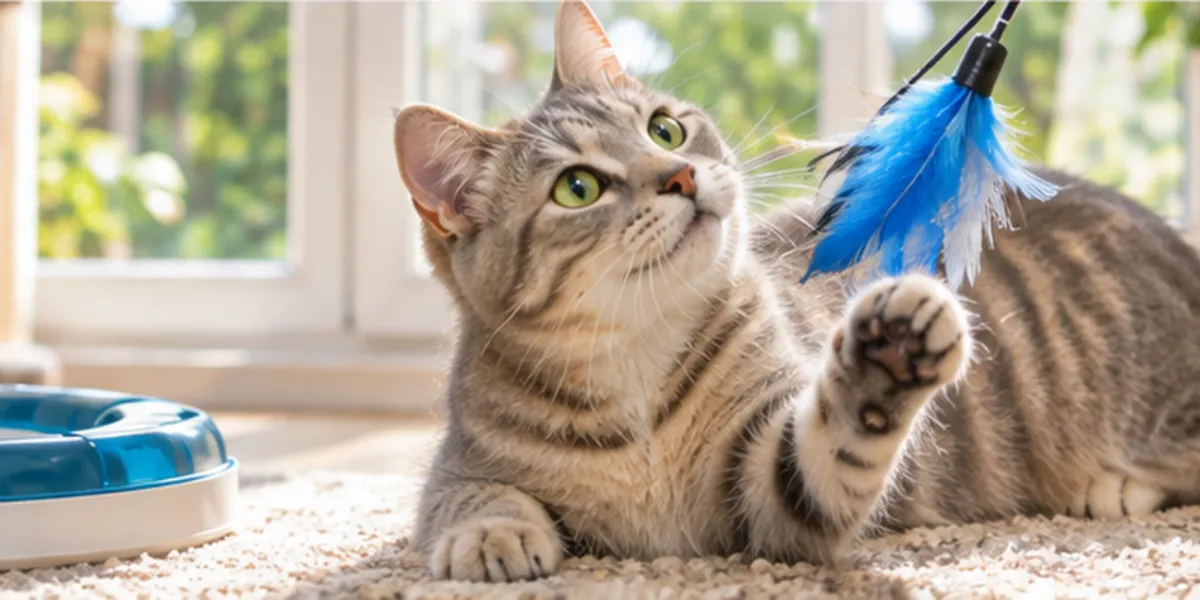
Practical Enrichment Ideas for Keeping Indoor Cats Active and Curious
Read Time:4 Minute, 25 Second
Indoor cats often live longer, more protected lives than cats that roam freely outdoors, but the indoor environment can also become predictable.
Food appears in the same place. Furniture rarely moves. There are no insects to chase, plants to investigate, or unfamiliar smells arriving every hour.
Because of this, indoor cats can benefit from simple enrichment that gives them regular opportunities to explore, climb, scratch, hunt, and solve small problems.
Enrichment does not need to be complicated or expensive. Small changes around the home can make a noticeable difference.
Indoor enrichment can combine interactive toys, tunnels, scratching areas and spaces to explore.
Think Like a Cat
Many natural cat behaviors are connected to hunting. Cats watch, stalk, chase, pounce, grab, and investigate.
Even well-fed indoor cats often retain these instincts. This is why a moving feather or rolling ball can be so interesting even when a cat has no need to hunt for food.
Good enrichment gives those natural behaviors a safe outlet.
Create Short Hunting Games
Interactive teaser toys are one of the simplest ways to create a hunting sequence indoors. Instead of waving the toy continuously in front of the cat, move it more like prey.
- disappear behind furniture
- move slowly before suddenly changing direction
- pause
- escape
- become catchable occasionally
Allowing the cat to catch the toy matters. A game where the target is permanently impossible to catch can become frustrating.
Owners looking for more cat enrichment ideas can combine toy-based play with simple environmental changes throughout the home.
Use Vertical Space
Cats do not experience a room only at floor level. Shelves, cat trees, window perches, and stable furniture can create additional territory without requiring a larger home.
- observe activity
- rest away from noise
- watch outdoor movement
- retreat from other pets
Always make sure elevated surfaces are stable and easy for the individual cat to access.
Rotate Toys
Cats can lose interest in toys that remain available every day. Instead of leaving everything out permanently, keep a few toys accessible and store the rest.
Rotate them every several days. The returning toy may feel new again simply because it has been absent. This is one of the easiest ways to make an existing toy collection more useful.
Add Food-Based Enrichment
Meals can become part of enrichment. Instead of serving every meal in a standard bowl, owners can occasionally use:
- puzzle feeders
- treat balls
- lickable food mats
- hidden kibble
- simple cardboard food puzzles
Start with easy challenges. The purpose is to encourage investigation, not to make food difficult to obtain.
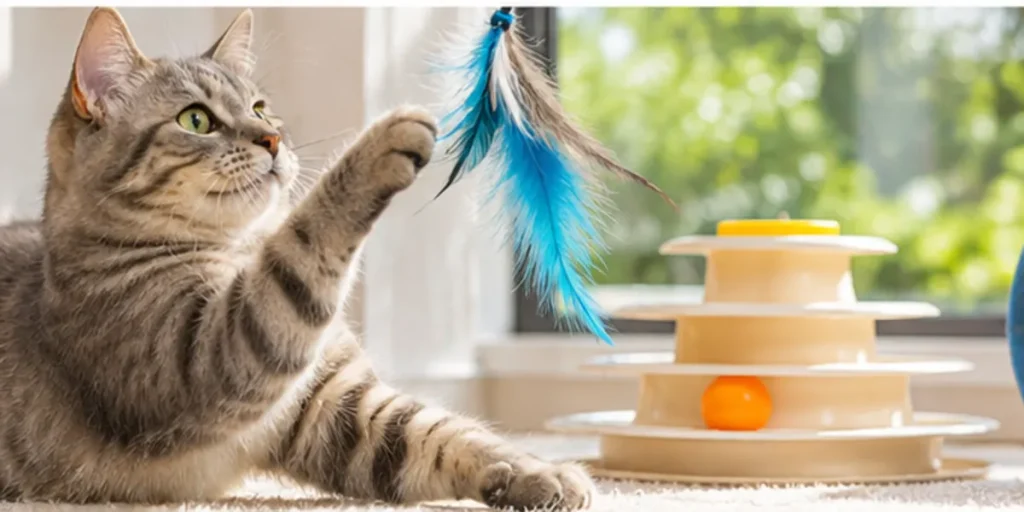
Simple play stations can encourage stalking, pawing, climbing and exploration indoors.
Provide Scratching Choices
Scratching is a normal cat behavior. Cats scratch to maintain their claws, stretch their bodies, and leave visual and scent marks.
Different cats prefer different surfaces. Some prefer vertical posts, while others prefer horizontal cardboard scratchers. Placing scratching surfaces near sleeping areas or commonly scratched furniture can make them more useful.
Boxes and Tunnels
A cardboard box may be one of the cheapest enrichment tools available.
- hiding places
- ambush locations
- new smells
- different textures
- spaces to investigate
Paper bags without handles can also be interesting for supervised exploration. Tunnels provide a similar opportunity for hiding, stalking, and short bursts of play.
Window Watching
A safe window perch can give an indoor cat hours of changing visual stimulation. Birds, people, trees, and outdoor movement provide variety without requiring the cat to leave the house.
Make sure windows and screens are secure.
Change the Environment Occasionally
Enrichment can be as simple as making a familiar room slightly different. Move a box. Create a blanket tent. Place a toy on a different level. Open access to a safe room the cat does not normally explore.
Cats often notice small environmental changes immediately.
Match Activities to Personality
Not every cat wants high-energy play. Some cats enjoy chasing and jumping. Others prefer slow investigation. Older cats may enjoy food puzzles, gentle teaser play, or comfortable viewing spots more than intense physical activity.
The best enrichment plan follows the individual cat rather than forcing the same routine on every pet.
Use Independent Toys Carefully
Automatic and moving toys can be useful when owners are working or busy. However, toys containing strings, feathers, batteries, detachable parts, or moving components should be inspected regularly.
Supervise new toys until you understand how the cat interacts with them.
Create Predictable Play Opportunities
Cats often respond well to routine. A short play session in the morning and another in the evening may be enough to create meaningful activity.
Sessions do not need to last a long time. Many cats naturally play in short bursts and then rest.
Combine Toys With the Environment
Pet stores such as Fur Friend Cares offer interactive and enrichment-focused products, but toys should be only one part of the indoor environment.
- play
- climbing
- scratching
- hiding
- food exploration
- observation
- rest
Final Thoughts
Indoor cat enrichment is not about keeping a cat busy every minute of the day. It is about creating regular opportunities to make choices and use natural behaviors.
A cardboard box, a window perch, several rotating toys, short hunting-style play sessions, and occasional food puzzles can already create a much richer environment. Watch what your cat chooses to do naturally, then build enrichment around those preferences.

Happy
0 %

Sad
0 %

Excited
0 %

Sleepy
0 %

Angry
0 %

Surprise
0 %
 0
 0
More Stories

7 Pet Carrier Mistakes That Can Make Traveling With Cats and Dogs More Difficult
A trip to the veterinarian, a weekend drive, or a visit to family can be exciting for pet owners but...

The Ultimate Guide to Maintaining a Healthy Garden Year-Round
A thriving garden doesn't just happen. Consistent attention is the price — season after season, through blistering heat and hard...
Water Damage Risks Every Commercial Property Should Address
Here's the thing about water damage — it doesn't wait. Hidden inside walls, lurking beneath flooring, it compounds silently until...

What Students Gain Beyond the Canvas in Art Class
Art class is often thought of as a creative outlet — a place where students learn to draw, paint, or...

When Energy Healing Supports Psychology with Spiritual Growth
There are moments in life when the familiar language of analysis and diagnosis feels insufficient. Not incorrect, but incomplete. The...

Finding A Lawyer to Help You Advocate for Yourself
Understanding Your Legal Rights and When Professional Help Is Essential Navigating the legal system can feel like trying to read...