

BestLinks AI Vs A Paid Invoice For Listings
Read Time:9 Minute, 4 Second
Directory owners in India often treat a vendor email as a price check. The mailbox looks harmless because no rupee has moved and no listing has changed. On a managed BestLinks AI job, that first note is already a start. The published Terms say a person accepts them by contacting the team to begin an engagement, or by paying an invoice. Waiting for the invoice to “make it official” is a habit from marketplaces that only bind at checkout.
A listing desk that sells local visibility already knows how a public profile works. The moment a shop name, phone, and category go live, strangers can call. The moment a domain and a few competitors leave the inbox, the guest-post vendor is allowed to treat that thread as an engagement. BestLinks AI does not need a paid invoice to consider the Terms accepted. The invoice is a second bind, useful for money and for the written fee. It is not the first clock.
The First Email Already Starts The Engagement
Most Indian listing teams write the first vendor note the way they write a directory claim: short, factual, and easy to reverse. They paste a domain, name two rivals, and ask for a shortlist. That message is the contact that starts an engagement. It is not a window-shop. The Terms attach when that note is sent to begin work, not when finance later clears a dollar invoice. A desk that wants a casual look should ask a question that does not start an engagement, or it should not send the domain yet.
The cost shows up as rework, not as a ranking argument. A shop owner who “just wanted options” later finds the thread treated as a live job. Legal asks who accepted the Terms. The answer is the person who emailed. Reconstructing that afternoon wastes the hour that should have gone into the listing copy. The protocol on the desk is a review of the outbound sentence before anyone hits send: does this note start work, or does it only ask whether the service exists.
Directory Listings Are Not Quiet Enquiries
FreeListingIndia teaches a useful contrast. A public listing is meant to be found. A private email to a vendor feels like the opposite. The Terms collapse that feeling. Contact that starts an engagement is enough. The listing desk cannot hide behind the idea that nothing is public yet. The bind is contractual, not indexed. If the owner would not put the same sentence on the public profile, the sentence may still be enough to accept the Terms.
That is the failure the desk can observe. The owner expected a menu. The vendor received a start. The two objects look identical in Gmail and mean different things. Compare them before the domain leaves, because after the send the comparison is only forensic. A note that names the domain, names competitors, and asks for a shortlist is a start. A note that asks “do you write English articles” without a domain is still a question. Keep the domain off the second kind of note until the owner is ready to be bound.
The Invoice Is A Second Bind, Not The First
Payment accepts the Terms again. That line exists so a buyer who never emailed, or who paid through a colleague, is still inside the same contract. It does not create a safe waiting room between the first email and the first transfer. BestLinks AI can treat both events as acceptance. A listing desk that waits for the invoice to feel serious has already accepted once. The later payment only confirms money, currency, and the written amount. It does not rewind the first email.
Marketplace muscle memory fights this. Self-serve checkouts train people to believe that nothing counts until a card is charged. This service is not a self-serve cart. The brochure site asks for an email with a domain and competitors. That email is the start. If the desk needs time to compare vendors, the time belongs before the domain is sent, not between the send and the invoice. Silence after the first note leaves an unread start in place, not a withdrawn one.
Paying Later Does Not Rewrite The First Email
Finance teams like a clean story: no contract until money moves. The published Terms refuse that story. Contact to start an engagement already binds. Paying the invoice also binds. The second event does not erase the first. If the owner changes their mind after the email and before any research, they still have to end the engagement in writing and follow the refund path that applies to unstarted work. They cannot claim that no Terms existed because the invoice was still a draft.
The observable miss is a thread that says “we were only asking” next to a first email that already named the domain and the rivals. That pair will not survive a later review. The cheaper hour is the one spent rewriting the first sentence. The expensive hour is the one spent explaining why a start was sent as if it were a brochure request.
How The Two Starts Differ On Paper
The comparison asks which event the listing desk is allowed to treat as optional, not which path is cheaper. Both columns below are complete, because a half-written bind is how the desk later claims it was only asking.
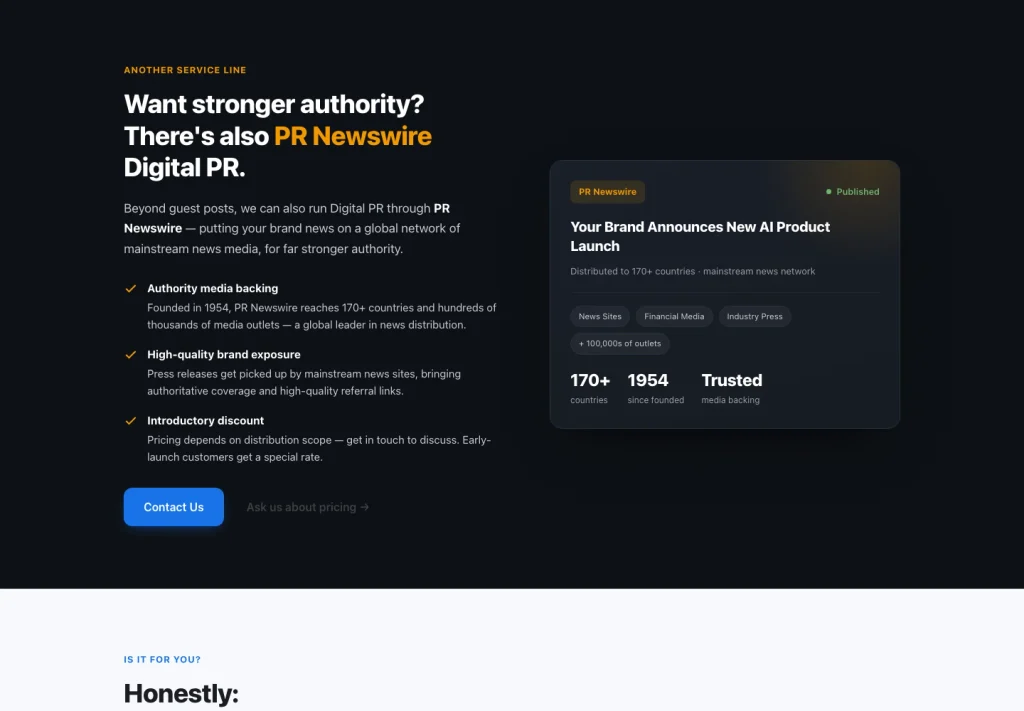
| Event on the desk | What the Terms already treat as accepted |
| Email sent to start work, with domain and competitors | The Terms are in force from that contact |
| Invoice paid in US dollars | The Terms are in force from that payment |
| Invoice drafted but unpaid after the first email | The first bind already happened; the draft is not a pause button |
| Owner stays silent after sending the domain | Silence is not a withdrawal of the contact that started the job |
A Guest Post Service that begins with an email cannot be managed like a directory listing that stays draft until publish. The listing can sit unpublished. The email cannot sit “unpublished” once it has left. The table is the intake check. If the owner is not ready for column one, the domain stays off the note. If the owner is ready, they send the note knowing column two may come later and will not be the first clock.
What Stays Off The First Note
The first note can stay short. It should not stay vague on purpose. If the owner wants a brochure answer, they ask whether English articles are the only format, or whether the team is still in early access. Those questions do not need a domain. The domain goes on the note that is meant to start work. Mixing the two is how a listing desk produces a thread that legal later reads as an engagement and marketing still calls an enquiry.
Keep product screenshots and competitor lists off the brochure question as well. Those files tell the vendor the job has begun. They are useful on the start note. They are surplus on a question about whether the service exists. The time lost sits in the queue of listings that waited while someone argued about a sentence that already named the shop’s own domain.
Who May Send That First Note
Listing firms often let a junior marketer send vendor mail because the public profile is “just a listing.” The Terms do not grade the sender’s title. They grade the act. A person who contacts the team to start an engagement accepts the Terms. A person who pays an invoice accepts them too. The junior marketer’s Gmail can be enough. The founder’s later invoice can be enough. Either event binds. Both events bind. The desk that lets anyone send the domain has let anyone start the job.
The listing-specific check is narrower than a general contract lecture. Who on this desk is allowed to start a paid guest-post job with a single email. If the answer is “whoever has the domain handy,” the firm will keep creating engagements it did not mean to create. Write the allowed sender on the same wall as the listing login. Then the first note has a name before it has a domain.
A Shared Inbox Still Binds The Firm
A shared marketing inbox feels safer because several people can see the thread, and that feeling misleads: more watchers make the risk louder, not smaller. Anyone with send rights can start an engagement that finance has not seen. The review is the send right, not the number of watchers. If the inbox can publish a directory listing without a founder, it can also bind a vendor contract without a founder. Restrict send, or accept that the first domain email is a management act.
Rejected drafts belong in the same folder as rejected listing copy. A note that almost named the domain and then stopped is a good discard. A note that named the domain and then tried to call itself a question is a bad discard, because it already left. The desk should scrap the first kind on purpose. The second kind cannot be scrapped after send. It can only be ended in writing.
What The Desk Records After The Send
Once the start note is gone, the listing desk should record three facts on the same line as the shop’s public profile: who sent it, which domain went out, and that the Terms are already in force. BestLinks AI will still send a later invoice. That invoice is for money. It is not the birth certificate of the job. If the owner later pays through a colleague, the second bind happens as well. The file should show both dates. It should not show a blank until money moves.
This record is what saves the afternoon when a partner asks whether “we actually hired them.” The answer is yes if the start email exists, even if the invoice is still a PDF in drafts. The partner may still decide to end the job before research. That decision is a written end, not a claim that nothing began. Listing teams already know this pattern from claimed-then-unpublished profiles. The difference is that an unpublished listing never left the building. An emailed domain already did.
Stop Calling The Invoice The Start
The useful habit is dull. Ask brochure questions without a domain. Send the domain only when the desk is ready to be bound. Treat payment as a second acceptance, not as the opening bell. BestLinks AI published both triggers on the same page. A listing firm that sells visibility should not pretend the first trigger is decorative.
Skip the habit of waiting for the invoice to feel official. The first email already did the official work. The invoice can still be read, paid, or refused on its own numbers. It cannot pretend the engagement had not started.

Happy
0 %

Sad
0 %

Excited
0 %

Sleepy
0 %

Angry
0 %

Surprise
0 %
 0
0
 0
0
More Stories

The Problem With Software “Best Of” Lists — And What a Recommendation-First Approach Looks Like Instead
Anyone who has tried to pick a SaaS tool recently knows the drill: open a "Top 10" listicle, find ten...

Create Engaging Visual Stories with AI Tools
Visual storytelling is no longer just for professional movie studios or high budget marketing agencies. Anyone with a computer and...

Listing Photos Fail When Image to Image Invents A Shopfront
Customers still walk to the address on the listing. A local Image to Image update is useful only when the...

CFA Coaching in Indore: Why Krypton Education Is a Smart Choice for CFA Aspirants
The CFA (Chartered Financial Analyst) program is one of the most recognized qualifications for students and professionals building a career...

How Apna Advantage Makes Online Education Affordable in India
The advent of online education has brought a new dimension to how students and working professionals choose to undertake their...

Construction Machinery Trends That Are Reshaping Heavy Equipment Operations
The construction industry has always relied on powerful equipment to complete demanding tasks, but the machinery used today is evolving...