
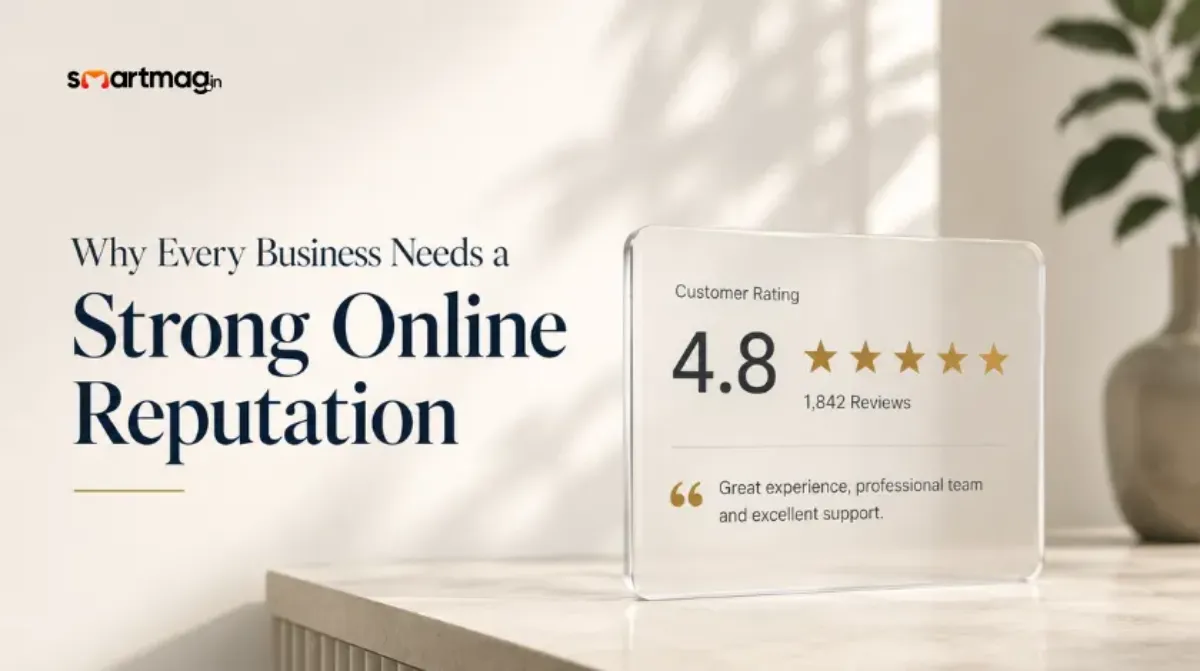
Why Every Business Needs a Strong Online Reputation
Read Time:8 Minute, 1 Second
A customer can know nothing about your company and yet can have an opinion in less than a minute. How? It depends on your business online reputation.
A search result, star rating, or unresolved complaint can determine whether they contact you or simply move on. Your online reputation is not something you tack onto your marketing. It’s the public proof that lets people know if your promises are credible.
Let’s discuss how it applies to every business that wants a strong market position.
Your Reputation Starts Working Before You Do
In today’s world, research is an integral component of any purchase. Customers evaluate the scores, read the latest reviews, and also observe how the company reacts when anything goes wrong.
As per a survey, around 97% of consumers read reviews for local businesses, and most of them do that every time they go online.
This means online reviews are no longer a final reassurance. They are the first filter consumers use.
A strong business reputation will help you get through this filter before even speaking with the client. It lets the client know that someone has already taken the risk and had a worthwhile experience.
Why Digital Credibility Directly Affects Sales
A polished website may attract attention, but it cannot carry the whole decision. People want evidence from sources that feel less controlled by the company.
1. It Lowers the Risk Customers Feel
Every purchase carries uncertainty. Does the product deliver? Does the service live up to its promises? Is the company going to help out if there are problems?
Transparency of information, current feedback, and respectful replies build brand trust by answering these questions without requiring the customer to ask them.
Positive feedback makes customers more likely to try the business, while consistent bad reviews have the reverse effect. This is why online reputation affects conversions. It removes part of the uncertainty that usually slows down a purchase.
2. It Helps Customers Choose Between Similar Businesses
In many industries, customers see several businesses offering similar services at similar prices.
The difference is rarely the headline alone. One company may have recent feedback, useful replies, accurate listings, and visible proof of good service. Another may have unanswered complaints and outdated information.
The first option feels safer. There lies the commercial value of business reputation; it makes a difference in situations where the features, pricing, and promises look almost identical.
Strong brand trust can also support repeat business and strengthen business reputation. The client is much more likely to return, refer someone else, or try another service if they trust the company from the very first purchase.
3. It Supports Visibility Beyond Your Website
Today, customers find businesses on directories, social media, videos, community conversations, and AI recommendation tools.
A study in 2026 found that the number of review sites that consumers accessed on average was six sites, whereas the use of generative AI in local recommendations increased rapidly as well.
Having a good distribution of accurate listings, mentions, and reviews will give more information to people as well as algorithms about your business.
Publishing useful content that goes beyond your website will also help expand your digital footprint. Guest blogging platforms such as SmartMag enable companies to share their views on issues, reach their target audience, and establish credibility via valuable content as opposed to direct promotional ads.
Before you submit the guest post, ensure that the topic genuinely helps the platform’s readers and reflects your brand’s expertise.
How Guest Posting Supports Online Reputation
An effective online reputation is not built only through reviews and listings for the company. It depends on where your brand is and the value that it offers to the audience from its external location.
This is where a relevant guest posting site can support reputation building. When a business publishes useful content on a trusted third-party platform, it can reach people who may not have discovered the brand through search or social media alone.
Guest posting is an essential component for building trust for a brand when the writing is clear, fresh, and relevant to the audience. It provides an opportunity for a company to establish its expertise without even contacting the client.
But it is all about quality. Writing for an irrelevant or low-quality website will not help with managing the reputation. The main thing here is to find a suitable guest posting website that belongs to the same business niche.
Businesses should submit a guest post only after checking the platform’s relevance, audience quality, and editorial standards.
Silence Can Damage Trust More Than Criticism
A negative comment is not always damaging. A defensive or absent response usually is.
When a company responds calmly, it shows someone is paying attention. Silence may suggest that poor service is normal or that complaints are inconvenient.
Consumers now have high expectations for companies to respond to their comments. 19% expect a response on the same day, while 32% expect it the following day.
Fast responses are vital for brand trust because it shows how much the company values customer experience.
Good replies should:
- Acknowledge the experience without arguing.
- Explain only what is necessary.
- Offer a clear next step.
- Move personal details into a private conversation.
- Post a brief update when the issue is resolved.
This is reputation management at its most useful. It does not erase criticism. It shows future customers how your business behaves under pressure.
Reviews Must Be Earned, Not Engineered
Perfect ratings can look less convincing than a realistic mix of detailed feedback.
Customers notice when every review uses the same language, appears within a short period, or makes vague claims without describing an actual experience.
There is also a legal and ethical risk. Rules introduced in the United States ban practices such as purchasing false reviews, paying for specific sentiments, concealing true negative opinions, and presenting misrepresented insider testimonials.
Though your company may be located somewhere else, the lesson will still be relevant to you because even if manipulated online reviews will temporarily give you an advantage, they harm your reputation in the long run.
A better approach is to:
- Approach all customers who are willing to, instead of just the ones who give you praise.
- Provide the support first and then collect feedback.
- Make it easier for them with a direct link.
- Do not recommend a rating to the customer.
- Have a consistent policy for the feedback collection and response.
Yes, it could take longer than just getting praise, but ethical reputation management ensures that you have evidence that cannot be copied by competitors easily.
Consistency Builds Trust At Every Touchpoint
Customers often check more than one platform before deciding. This means they go to your website, Google Business Profile, Instagram, directory listing, and reviews site in a few minutes. If there is any inconsistency in information, they become sceptical right away.
Customers notice small contradictions. A different phone number on a directory, an outdated service list, or an abandoned social page can make an established company look careless.
Your key details should stay consistent:
| Information | What Customers Expect |
| Business name | The same name across every channel |
| Contact details | Current phone number, email, and address |
| Services | Clear descriptions without conflicting claims |
| Opening hours | Accurate timings, especially on holidays |
| Policies | Straightforward delivery, refund, or booking terms |
| Tone | Helpful and professional responses everywhere |
Consistency strengthens online reputation because it removes avoidable doubt. It also supports brand trust by showing that your business is organised wherever customers find it.
The copy does not need to be identical everywhere. The facts and service standards do.
Reputation Problems Often Start Inside the Business
No amount of reputation management can permanently hide slow deliveries, confusing communication, or poor support. Public criticism is often a symptom of an operational issue.
Look for repeated themes rather than reacting emotionally to one comment. For example, 3 complaints about unclear pricing may point to a weak quotation process. Or several mentions of delayed replies may expose a staffing problem.
This is where online reviews become operational data. They show where customer expectations and your internal process are drifting apart.
Act on that information, and business reputation improves for the right reason: the experience itself becomes better.
Build a Simple Reputation Routine
To build and maintain a strong online reputation for your business, you need to have clear ownership and a repeatable rhythm. Best online reputation management agencies follow a routine you will find useful:
Every Week
- Check review platforms, social mentions, and branded search results.
- Reply while the details are fresh.
- Record recurring complaints and questions.
Every Month
- Confirm that listings and contact details are accurate.
- Check whether customers receive feedback requests consistently.
- Turn common questions into useful website content.
- Share patterns with operations and customer service teams.
Every Quarter
- Evaluate sentiments, response time, rating patterns, and repeat service failures.
- Revise your reputation management strategy if there are any changes to your responsibility level.
- Verify your testimonials and endorsements.
Monitoring online reviews regularly will also give you a chance to solve small service issues before they become a pattern. Good reputation management should be a silent but steady effort rather than an emergency crisis control.
Check What Customers See Today
Your business reputation is in the making regardless of whether you manage it consciously or not. Conduct an online search of your company name, see the first page of search results, and write down whatever appears out of date, unanswered, or untruthful. Solve one issue that is visible to everyone today and continue with another tomorrow. This simple step will increase your brand credibility and make a more positive impression of your business before anyone says a word about it.

Happy
0 %

Sad
0 %

Excited
0 %

Sleepy
0 %

Angry
0 %

Surprise
0 %
 0
0
 0
0
More Stories

BestLinks AI Vs A Paid Invoice For Listings
Directory owners in India often treat a vendor email as a price check. The mailbox looks harmless because no rupee...

CFA Coaching in Indore: Why Krypton Education Is a Smart Choice for CFA Aspirants
The CFA (Chartered Financial Analyst) program is one of the most recognized qualifications for students and professionals building a career...

How Apna Advantage Makes Online Education Affordable in India
The advent of online education has brought a new dimension to how students and working professionals choose to undertake their...

Construction Machinery Trends That Are Reshaping Heavy Equipment Operations
The construction industry has always relied on powerful equipment to complete demanding tasks, but the machinery used today is evolving...

Create Better Small-Business Marketing Visuals Without a Full Photo Shoot
A small business can need a surprising number of images in one month: a seasonal post, a directory listing, a...

5 Tips on Creating a Brand That Attracts Early Customers
When you launch a new business or product, your initial challenge involves more than just offering something valuable. You need...